Fifteen years ago, “home automation” usually meant a clunky timer switch plugged into an outlet or a $50,000 custom Crestron rack that could require specialized technical support. Installing a smart switch often introduced compatibility and troubleshooting challenges for both homeowners and electrical contractors.
Today, we regularly work with clients who arrive with detailed home automation plans. Modern smart technology is not only more streamlined and sophisticated—it is also practical, energy-efficient, and increasingly designed around established electrical standards. Beneath the app interfaces and voice controls, every smart feature still depends on reliable copper wiring, stable current, and thoughtful electrical box planning.
Here’s a smart home electrical guide of the mind-blowing technology available today, along with the electrical realities you need to know before turning your home into a fully connected masterpiece.
1. The “Cool Factor”: Today’s Most Exciting Innovations
Forget just turning a porch light off from your phone. The current generation of smart home tech touches every layer of residential electrical infrastructure.
Smart Load Centers & Next-Gen Panels
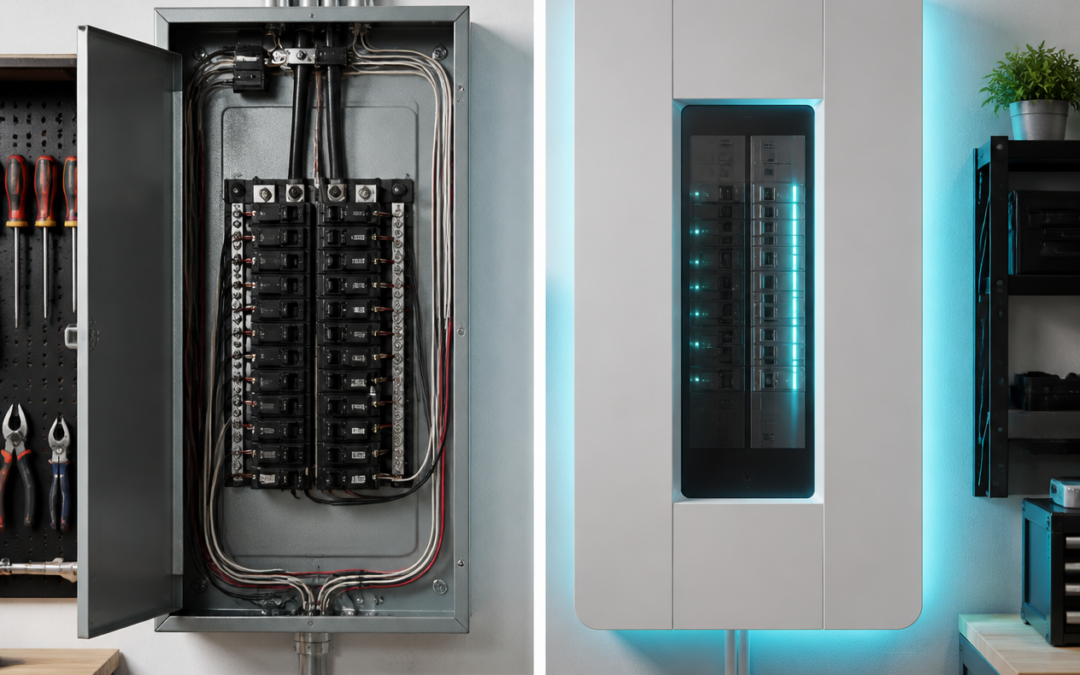
Systems like the SPAN Smart Panel or Leviton Smart Load Center are changing the game. Instead of dumb mechanical breakers sitting in a dark basement cabinet, smart panels monitor energy consumption circuit-by-circuit in real time.
- Dynamic Load Shedding: If power goes out and your backup battery kicks in, the panel automatically turns off high-draw non-essentials (like the hot tub or dryer) to keep your fridge and lights running days longer.
- App-Based Breaker Control: Turn off power to specific branch circuits right from your phone without standing in front of an open panel.
- Real-Time Diagnostics: Identify an idling HVAC compressor or a failing sump pump before it trips a breaker or causes costly water damage.

Matter & Thread: The Unified Protocol Dream
In the past, building a smart home meant picking a side: Apple HomeKit, Amazon Alexa, or Google Home. If you bought the wrong switch, it refused to talk to the rest of your gear without buggy third-party bridges.
Enter Matter over Thread. This unified smart home protocol allows devices from different manufacturers to communicate locally over a fast, self-healing mesh network. As an installer, this means no more troubleshooting cloud server downtime or bridge pairing failures. You flip the switch, and the light responds instantly.
Microgrids & Intelligent Energy Management

Modern smart homes are no longer passive power consumers—they are mini power stations. Integrating solar panels, battery storage (like the Tesla Powerwall or Enphase IQ), and level-2 EV chargers used to require complex manual transfer switches.
Today’s smart energy hubs dynamically calculate utility time-of-use rates. They charge your electric vehicle when power is cheap at 2:00 AM, sell battery power back to the grid during peak afternoon rates, and isolate your home seamlessly during neighborhood blackouts.
2. The Electrician’s “Real Talk”: Technical Realities & Checklist
Now for the trade secrets and physical realities. A smart switch isn’t just a regular switch with a computer chip—it changes how power moves through your wall boxes. Before you go on an online smart shopping spree, review this critical electrician’s checklist.
1. The Neutral Wire Requirement
Standard toggles simply break the hot line. Smart switches, however, need constant power for their internal Wi-Fi/Zigbee radios and status LEDs. That continuous power loop requires a neutral wire (usually white).

2. Box Fill Capacity & Depth Constraints
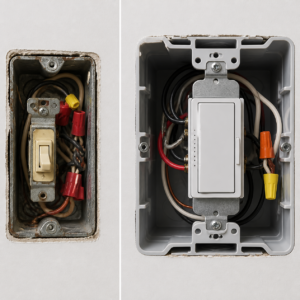
Smart switches are bulky. If you stuff a thick smart dimmer into a shallow, 1970s steel gang box packed with wire nuts, you risk pinched wire insulation, short circuits, or thermal buildup (violating NEC Box Fill rules).
3. Three-Way & Multi-Location Complexity
In traditional 3-way lighting (two switches controlling one light), mechanical traveler wires physically toggle power. Smart 3-way setups work differently: you typically install one master smart switch paired with electronic companion switches or wireless remotes (like Lutron Pico).
4. Wi-Fi Overload vs. Dedicated Mesh
Connecting 40+ individual Wi-Fi smart switches directly to your standard ISP router will choke your bandwidth and cause random device dropouts. Opt for dedicated low-frequency mesh protocols (Z-Wave, Zigbee, or Thread) whenever installing more than 5 smart wall devices.
3. Summary & Practical Next Steps
Smart home automation has evolved from a trendy novelty into a practical, value-adding upgrade for any home. When planned correctly alongside clean electrical work, it delivers incredible convenience, automated security, and tangible energy savings.
If you are preparing for a smart home installation:
- Audit your existing wall boxes for neutral wires and adequate physical depth.
- Decide on your core wireless protocol (Thread/Z-Wave vs Wi-Fi) before buying hardware.
- Plan major electrical loads (EV chargers, smart panels, heat pumps) with total service capacity in mind.
- Bring in a licensed electrician to handle high-voltage wiring, panel upgrades, and multi-switch circuits cleanly and safely.
Here’s to building a home that isn’t just smarter—but safer and better wired for the future!
Ready to Upgrade Your Wiring?
Planning a Smart Home Build or Retrofit?
Don’t let hidden wiring issues derail your smart home project. Work with a qualified, licensed electrician to ensure your panel, junction boxes, and smart devices operate safely and flawlessly for years to come. Schedule your Free Estimate today!